From Design to Proven Readiness

System-level protection architecture designed to ensure operational continuity under extreme conditions.

How a Civil Shelter Operates

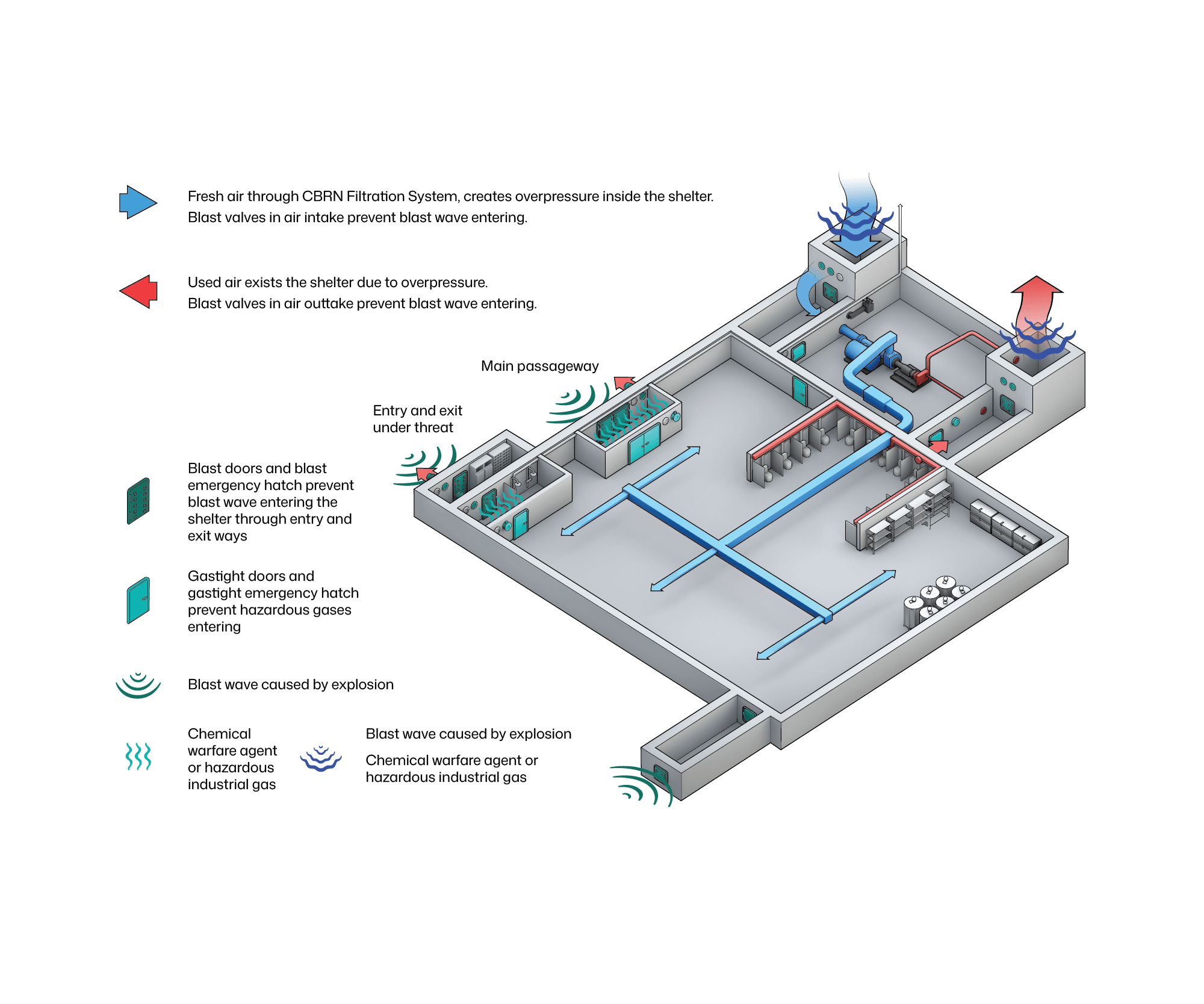
A civil shelter is an integrated system, not a single structure. Fresh air enters through CBRN filtration, building controlled overpressure that blocks external contamination. Blast valves, gastight doors, and sealed penetrations protect every opening. The result is a fully enclosed, self-sustaining protected environment.

Complete Protection Architecture​

Verona Shelters provides a complete protection architecture for civil protection, defense, and critical infrastructure.

Integrated shelter systems combine mechanical protection, intelligent control technologies, and specialized filtration solutions to ensure continuity during blast events, CBRN threats, electromagnetic pulse disturbances, and other high-risk environments.

Shelter System Explorer

Click any component to see what it does.

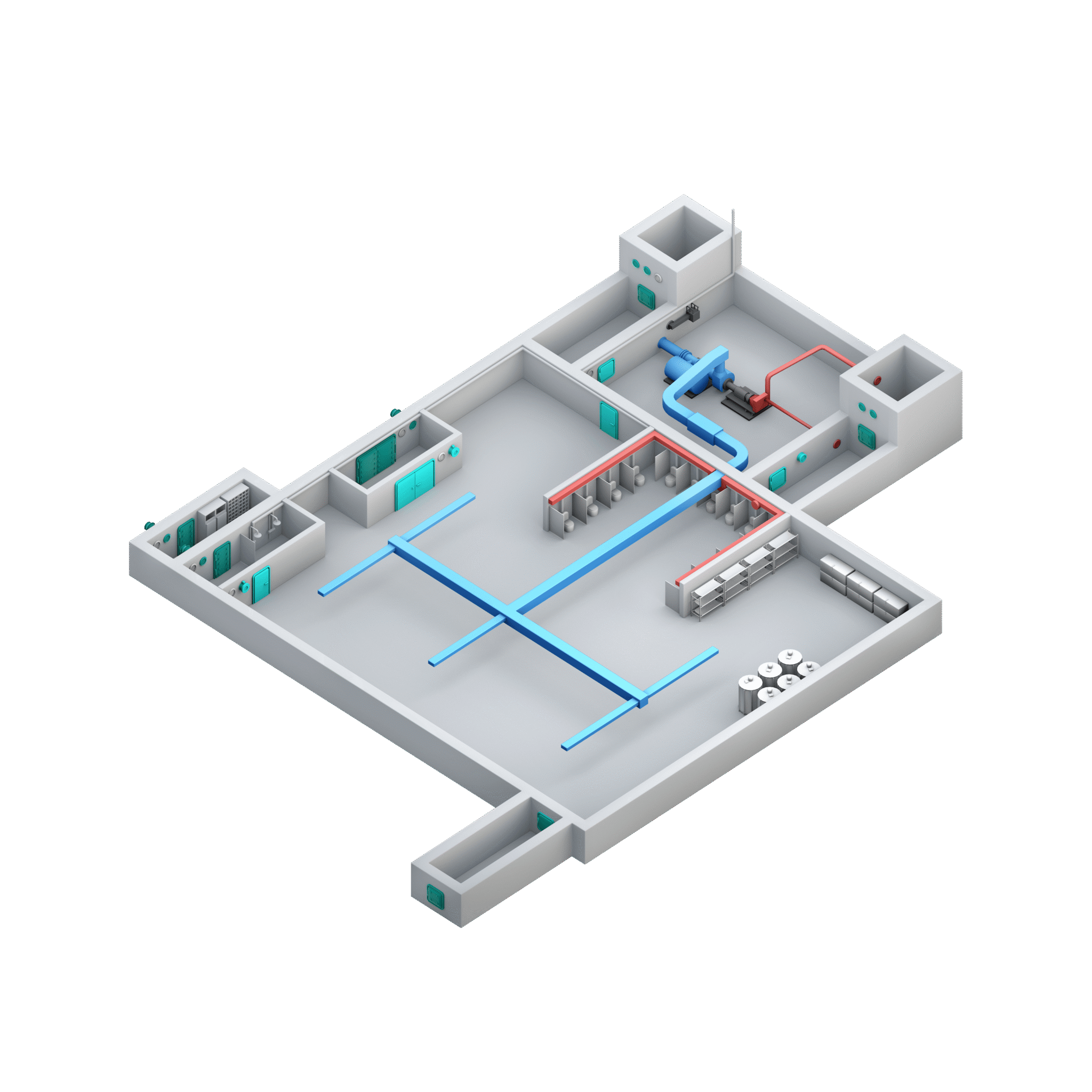
Cross-section diagram of a civil protection shelter showing component layout and air flow system
  • Blast Door — Heavy-duty double-leaf blast door engineered to withstand extreme overpressure from blast events. Seals entry points against blast wave penetration.
  • Gastight Door (Double Leaf) — Double-leaf door with full gastight sealing. Prevents chemical warfare agents and hazardous industrial gases from entering the shelter.
  • Blast Valve — Installed in air intake ducts to stop blast waves from propagating into the shelter through the ventilation system.
  • Blast Valve, Exhaust Gas — Exhaust-side blast valve that allows air to exit while blocking reverse blast wave propagation through the outtake.
  • Gastight Valve — Seals ventilation ducts against chemical and biological agents. Works in combination with blast valves to provide full CBRN duct protection.
  • CBRN Filtration System — Core filtration unit that removes chemical, biological, radiological and nuclear contaminants from incoming air before it enters the shelter.
  • CBRN Detector — Monitors incoming air for the presence of CBRN agents. Triggers automated protective responses when threats are detected.
  • Prefilter — Pre-filtration stage that removes particulate matter before air reaches the main CBRN filtration system. Extends filter service life.
  • Wall Sleeve (Air) — Structural penetration sleeve for air intake ducting through reinforced shelter walls. Maintains wall integrity around duct penetrations.
  • Wall Sleeve (Electrics) — Sealed penetration sleeve for electrical cabling through shelter walls. Prevents gas and blast propagation through electrical conduit entries.
  • Overpressure Meter — Monitors and displays internal shelter pressure in real time. Confirms overpressure is maintained at the level required for protection.
  • Overpressure Blast Valve — Regulates internal overpressure levels. Releases excess pressure while maintaining the minimum threshold required to block external contamination.
  • Bed Package — Modular bunk bed system designed for shelter occupation. Space-efficient configuration for extended stay capacity.
  • Water Tank — Portable collapsible water storage for shelter occupation periods. Sized for civil protection occupancy requirements.
  • Sanitary Unit — Self-contained sanitary unit for use during shelter occupation. Designed for installation in confined shelter environments.
  • Accessory Box — Storage unit for shelter equipment, tools and supplies. Standardised dimensions for efficient shelter space planning.
  • Blast Hatch — Emergency hatch with full blast protection. Provides an alternative exit or entry point with equivalent protection to main blast doors.

Dual-Use Explained​

Modern shelter systems are designed for dual use. In normal conditions, they function as car parks, metro stations, residential basements, or public facilities. Under crisis conditions, they convert into protected environments without structural compromise.

Dual-use integration ensures that protection infrastructure remains economically viable and operationally relevant in everyday life.

Car parks
Metro stations
Multisport facilities

Savilahti Bedrock Shelter

A large-scale dual-use underground facility in Kuopio, Finland, providing civil protection for 7,000 people while operating as a public sports and event venue in normal conditions.


Explore Savilahti-case
Scroll to top